



Martin's Auto Repair blog

Come join us for tips, QnAs, and more, all centered around automotive maintenance, repair, and use.

October is… National Fall Car Care Month

 This is the perfect time to give your vehicle a little attention!

Living in Phoenix, our vehicles don't need as much winter care as those in our northern cities or those in the northern US states. But… if you will be traveling to those areas you need to be prepared.

9 Tips to get the MOST out of Fall Car Care Month!

  1. Get an oil change: Not only is it good practice to get an oil change when you're going into the fall and winter, but it's essential to keep up with your routine service all year to get the best out of your vehicle.
  2. Wiper blades: Whether it's rain, sleet or snow that ends up on your windshield, your wipers need some attention. Before the weather of the season arrives, check your blades. The heat we experience throughout the summer in Arizona can dry out our wipers quicker thicker than usual. Don't wait until it rains or snows to find out your blades need to be replaced.
  3. Change your cabin air filter: You should change your cabin air filter for two reasons. If you have allergies in the fall, replacing your cabin air filter can help – when your cabin air filter is clogged with dirt and debris from our summer monsoons, it doesn't as effectively filter out allergens like pollen, dirt, and dust.
  4. Check your tires: Road trips for the holidays will soon be underway. Don't wait until you've packed the car to leave before you check your tires. An inspection is needed to make sure you don't have any unseen issues that could cause a bigger problem or accident. Look for nails or other objects, cracks or tears and low tread. You want to have the inspection before you pack the car so that your spare can also be inspected. You don't want to find out it's too old or has any issues just in case it's needed.
  5. Brake check: Fall is the perfect time to check your brakes. Did you know that brake wear and tear tend to increase in the winter months? We have more traffic on the road when our friends from the north are here to enjoy our great fall/winter weather. More traffic means we are breaking more as we are stopping and starting more often which can wear brakes out faster. Depending on how often you brake or how aggressive of a driver you are, brakes can wear out quickly, and even excessive friction and heat from the long summer can cause cracks to form. If you've noticed any squeaking, grinding, or squealing, it's time to get your brakes checked and replaced before the winter.
  6. Get an alignment: In Phoenix, we have several different terrains to drive on, concrete, asphalt, dirt, and rocks. We even hit a pothole now and then that can make you cringe!On top of doing your best to slow down and avoid these hazards, you should also get an alignment check in the fall. It's the perfect time when you are having your tires checked. Make sure that your tires don't wear out quickly by ensuring that they're running straight. Plus, if you happen to hit one of those MONSTER potholes, you can always visit us for a four-wheel alignment as we have a state-of-the-art machine to give you an accurate alignment!
  7. Shocks & Struts: One of our technicians will also inspect your suspension during your visit! Not only are potholes rough on your tires and alignment, but they can also take a toll on your shocks and struts.
  8. Top off those fluids: Be sure to stop by and have our team check your fluids to get you ready for your fall road trips! Some of us travel to colder weather in the winter so we want to make sure you have the correct winter coolants in your vehicle. It's also a great time to fill up your washer fluid to help with better visibility.
  9. Time for a bath: Make sure that you give your vehicle a good wash! The sand, dirt, and road chemicals are tough on the underneath of our vehicles. This includes brake lines, fluid lines, and even your paint!

As you get ready for the fall and winter months and your holiday travels the things to remember are:

Better performance comes with understanding your vehicles' needs.

Keeping up with the important regular maintenance is the key to getting the most years and mileage out of your vehicle.

Find a shop that works with you to get your vehicle better prepared to hit the road.

Until next time… AutoDave

Reasons To Repair vs. Buy

 Reasons To Repair, Not Buy A New Car

It's a debate many of us face: pay for another car repair or buy a new one. Here are a few top reasons to repair not replace your vehicle, along with the smartest way to pay for repairs.

Why Repair And Not Replace?

  • 1.It's almost always cheaper to fix rather than take on new monthly payments, higher insurance premiums, and increased registrations fees.
  • 2.Depreciation
  • A new car loses more than 20 percent of its value the first year. Edmunds data show the Ford F-150 pickup loses 28.6 percent its first year. Carfax says after the first year, cars then lose 10 percent of their value each year for the next four years. So, after five years the car is worth just 40 percent of its purchase price.
  • 3.Repairs can pay for themselves.
  • Depending on your car's condition, the repair could boost its value. For example, a $1,000 repair might increase your car's value by $1,000. Our certified mechanics are able to provide an estimate and go over the details with you.
  • 4.Repairing will give you time to research options and save for another vehicle (preferably a used one that has been checked out first by a certified mechanic).
  • 5.Sentimental attachment
  • Money aside, if the idea of replacing your car makes you feel like you'd be losing a good friend then repairing may be the best route.

How To Cover Repairs If You're Financially Strapped

  • 1.Ask for a breakdown for parts and labor.
  • 2.After consulting with a certified mechanic, determine what repair(s) can wait. Focus on the highest priorities, especially safety issues. We are always happy to go over all the details and needs of your vehicle so that you understand what to expect and what is important for your needs.   

How To Avoid The Costly Repairs:

Regular maintenance is the best way to avoid problems and keep your car running for years and miles to come. Continue to work with a certified mechanics and stick with that person or shop in order to maximize the relationships-and savings. When we know your vehicle we can services it better!


Until Next Time...  Auto Dave

Headlamp Replacement and Restoration

headlamp replacement

Way too many accidents happen at night on AZ roads. There are a lot of factors, but a big one is simply visibility: if you can’t see something, it’s hard to avoid hitting it.

There are some things Phoenix drivers can do to make sure they can see as much as possible when they’re driving in the dark. First of all, keep your windshield clean. Glare from oncoming headlights can obscure obstacles in the road. Clean off that film that builds up on the inside of your windshield. And make sure you have good wiper blades and plenty of washer fluid.

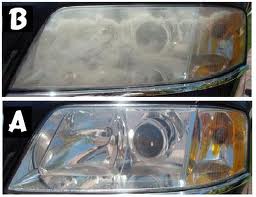
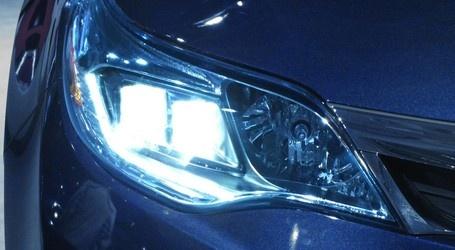
Headlight restorationNow it could be that your headlights aren’t as bright as they used to be! It happens – the bulbs just dim over time. If it’s been a couple of years since you replaced your headlamps and they aren’t lighting up the road like they used to, get some new ones. They make upgraded headlamps too that give you a brighter light and a larger field of vision so you can see better and further down the road. Check with your knowledgeable Martin’s Auto Repair service advisor if you want to up your headlamp performance.

Another very common headlamp problem is cloudy or yellowed lenses. These days lenses are plastic and they oxidize and discolor over time. Just look at the cars in the parking lot, chances are you’ll see several with cloudy lenses. This is a huge problem because some of the light coming from your headlamps gets trapped before it can even get out and shine down the road.

Replacing a set of headlight assemblies can run hundreds or even thousands of dollars. There’s an alternative that can save drivers big bucks: Headlight restoration. We can remove the oxidized layer from your lenses then polish the lenses until they’re bright and smooth. When it’s all finished, your lenses will be as good as new.

Until Next Time …

Brakes for Breasts

Shop B4B Photo1 300x249

We are proud to do our part to help fight breast cancer! For the entire month of October we are offering FREE…

Brake Inspections and Pads (up to an $80 value)

Martin’s Auto Repair will also be donating 10% of the labor cost to Dr. Vincent Tuohy at The Cleveland Clinic Breast Cancer Vaccine Research Fund. For more information visit http://giving.ccf.org/

Brakes for Breasts benefits you along with helping to fund the necessary research to fight this terrible disease that takes the lives of so many women and men! We look forward to checking out your brakes!

THE MORE BRAKES WE REPLACE, THE BIGGER CHECK WE WRITE!!!!

Selecting tires

tire01

Question:
I need new tires. How do I know which ones to get?

Answer:
The most important factors to consider are: Function, Fit, and Value.

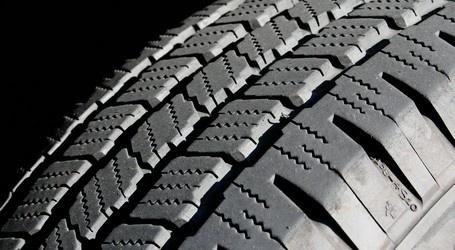
Function: This gets at what your needs are for new tires: weather conditions, terrain, temperatures, etc.

Most new family vehicles come with all-season tires. They can be used all year long and do pretty well in most road conditions – but they aren’t ideal at the extremes.

Winter tires have a more aggressive tread for handling snow and ice on highways and they have a rubber compound that helps them have better traction as temperatures drop below 45 degrees. Definitely better stopping and road-holding characteristics for drivers than all-season tires in winter weather. Dedicated summer tires enhance warm weather performance driving for auto owners.

If you drive off-road, there is a spectrum of tires from all-terrain (a good mix of highway and off-road capability) to dedicated off-road tires.

The key is to talk to your tire professional and consider the function you need to get the type of tire, load rating, speed rating and wear rating you need.

Fit: The easiest thing is to select tires in the same size that were installed by the auto maker. If you want a different size wheel or tire profile, be sure to work with your service advisor so you can make sure that your new wheels and tires fit properly and don’t rub in bumps or turns. It’s also essential to make sure that important safety systems like anti-lock brakes, stability control and traction control aren’t adversely affected by the new tire size (the computer may need to be recalibrated to make necessary critical adjustments).

Value: Note, I didn’t say price. The tire that meets all your needs AND has the warranty and tread life you expect will often not be the least costly option – but it may well return the best value for your tire dollar.

Until next time…

How much to replace a water pump

water pump

Question:

My water pump went out and it cost much more to replace than ones I’ve had replaced in the past, and I was told that it is because of where it’s located. Why is that?

Our Answer:
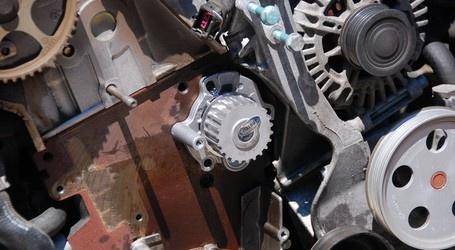
Some water pumps are driven by the serpentine belt and are bolted on out in the open with the alternator and air compressor and such. Other water pumps are driven by the timing belt. These water pumps take a lot of labor to access and replace. It seems your current vehicle has a water pump that is driven by the timing belt.

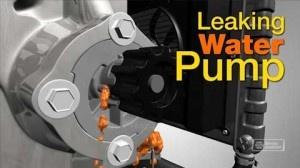
Water Pump 300x168Water pumps are fairly easy devices that circulate engine coolant/antifreeze around the engine and out to the radiator. Like any mechanical device, they eventually wear out. Although having a cooling system service done on schedule will extend the life of your water pump and its seals and gaskets – but, it will eventually fail and need to be replaced.
Those water pumps that are driven by the timing belt (the belt that controls when your engine intake and exhaust valves open) are attached directly to the engine block. The timing belt system has an important protective cover. The serpentine belt and all the accessories are located over the timing belt cover. So getting to the water pump requires the service specialist remove a lot of parts – which then need to be replaced.

When the water pump must be replaced, it is a good idea for you to go ahead and also replace the timing belt, timing belt tensioner and idler pulleys. First, because the timing belt may have been contaminated by leaking coolant; second, there is a schedule for replacing your timing belt and you should think of making the modest additional added expenditure while everything is taken apart to avoid the same labor cost down the road.

By the way, the reverse is true as well: When you are replacing your timing belt on schedule go ahead and replace the water pump at the same time. It would be a shame to spend the money on one of these replacements only to have to do it all again in a few months because the other then needs replacement. Do them at the same time and start the clock over for both.
Until next time…

How do you select the right tires?

tire02

Question:
I need new tires. How do I know which tire to get?

Answer:
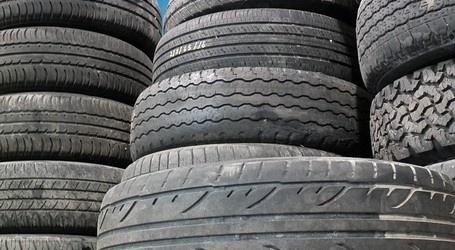
Let’s take a look new tires based on these three factors: Function, Fit, and Value.

Function: What are your needs for new tires: weather conditions, terrain, temperatures, etc.

Most new family vehicles come with all-season tires. They can be used all year long and do pretty well in most road conditions – but they aren’t ideal during the extremes.

Winter tires have a more aggressive tread for handling snow and ice on highways and they have a rubber compound that helps them have better traction as temperatures drop below 45 degrees. Definitely better stopping and road-holding characteristics for drivers than all-season tires in winter weather. Dedicated summer tires enhance warm weather performance driving.

If you drive off-road around Phoenix, there is a spectrum of tires from all-terrain (a good mix of highway and off-road capability) to dedicated off-road tires.

The key is to talk to your  service writer and consider the function you need to get the type of tire, load rating, speed rating and wear rating you need.

Fit: The easiest thing is to select tires in the same size that were installed by the auto maker. If you want a different size wheel or tire profile, be sure to work with your service advisor so you can make sure that your new wheels and tires fit properly and don’t rub in bumps or turns. It’s also essential to make sure that important safety systems like anti-lock brakes, stability control and traction control aren’t adversely affected by the new tire size (the computer may need to be recalibrated to make necessary critical adjustments).

Value: Note, I didn’t say price. The tire that meets all your needs AND has the warranty and tread life you expect will often not be the least costly option – but it may well return the best value for your tire dollar.

Always ask question so that you understand what you need and how the tires will perform for you.

Until Next Time…