









Clicky

Jump to content

602.266.5755

Address | Hours

Find us on FacebookinstagramReview us on YelpSee our Youtube Channel

602.266.5755

Address | Hours

Find us on FacebookinstagramReview us on YelpSee our Youtube Channel

Martins Auto Phoenix is 50 years old

Professional, Honest Automotive Repair and Maintenance in Central Phoenix since 1971

Professional, Honest Automotive Repair and Maintenance in Central Phoenix since 1971

Finance your phoenix vehicle repairs
36 month, 30000 mile warranty
Loyalty rewards
Underneath the hood podcast
  • ABOUT
    • About Martins
    • Team
    • Community
  • APPOINTMENT
  • TESTIMONIALS
  • SERVICES
    • Major Services
      • Air Conditioning & Heating
      • Engine Cooling System
      • Fuel Injection
      • Oil Changes
      • Transmission
      • Brakes
  • BLOG
  • CONTACT
    • Contact Us
    • Employment
Meet the Martins Auto team

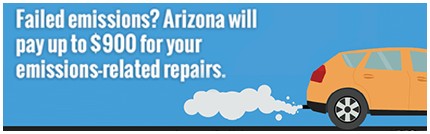
Phoenix Emissions Repair Facility for the AZDEQ
Voluntary Vehicle Repair Program (VVRP)

More VVRP Information here

Phoenix Emissions Repair Facility for the AZDEQ
Voluntary Vehicle Repair Program (VVRP)

More VVRP Information here

ADEQ

Central Phoenix Automotive Service by Martin's Auto Repair

Auto air conditioning service

Air Conditioning

Auto engine cooling service

Engine Cooling

Auto fuel injector service

Fuel Injection

Auto oil changes

Oil Changes

Auto transmission service

Transmission

Auto brake service

Brake Systems

Auto air conditioning service

Air Conditioning

Auto engine cooling service

Engine Cooling

Auto fuel injector service

Fuel Injection

Auto oil changes

Oil Changes

Auto transmission service

Transmission

Auto brake service

Brake Systems

  1. You are here:  
  2. HOME
  3. Services

Brakes

Richard Petty once told AutoNetTV, “You’ve gotta have good brakes. If you’ve got good brakes you can keep yourself out of a lotta trouble.”

That’s why a regular brake inspection is on every Arizona vehicle’s maintenance schedule. An inspection at Martin’s Auto Repair will check your brake system and let you know if there are any problems.

Here are some symptoms to watch for:

  • Low or spongy brake pedal
  • Hard brake pedal
  • A brake warning light that stays on
  • Constantly squealing or grinding brakes
  • Vibrations or clunking sounds when you apply your brakes

If you are experiencing any of these, it’s time to get your brakes checked.

There are two types of brakes: disc and drum. Disc brakes have a rotor that’s attached to the axle. Calipers straddle the rotor, kind of like the brakes on a bicycle.

Drum brakes are more common on back wheels. Both types have pads or shoes that press against the brakes and slow the vehicle. Brake pads and shoes are made out of very tough material to withstand the heat and force generated when stopping your car.

If the brake pads wear away completely, you can damage the rotors. The calipers can grind grooves in the rotor. Then the rotor must either be resurfaced or replaced. That’s not only expensive, but also dangerous because your vehicle won’t stop as quickly. Sometimes rotors warp or crack and must be replaced.

Brake service will also include a check of your brake fluid. Not enough fluid means not enough pressure to brake properly. Also, water builds up in the brake fluid over time, which leads to corrosion, leaks and brake damage. You should change the brake fluid when your manufacturer recommends to avoid these problems.

So, be sure to properly maintain your brakes, because it’s a lot cheaper than paying the body shop after an accident.

Transmission

It can be easy to forget about getting your transmission serviced because it doesn’t need it very often. It’s easy to remember to change your oil (you know, every 3,000 miles) to help keep your engine running smoothly. But, we want to remind you that proper transmission servicing also helps to keep your car running smoothly and helps you avoid costly repairs down the road.

The transmission undergoes a lot of stress. The grit you see in used transmission fluid is actually bits of metal that wear off the gears in the transmission. In addition to that, the transmission operates at very high temperatures, usually 100 to 150 degrees higher than engine temperatures. Those high temperatures eventually cause the transmission fluid to start to break down and lose efficiency.

As the fluid gets older, it gets gritty and doesn’t lubricate and cool the transmission as well – leading to even more wear and tear. The fluid can actually get sludgy and plug up the maze of fluid passages inside the transmission. At best, your transmission won’t operate smoothly. At worse, it could lead to costly damage.

When your transmission is running properly, it transfers more power from your engine to the drive wheels, and improves fuel economy. That’s why manufacturers recommend changing your transmission fluid at regular intervals. Your owner’s manual has a schedule for transmission service and, of course, we will inspect the fluid to help keep your scheduled service on track.

Hot and dusty conditions; towing, hauling, stop and go conditions and jack rabbit starts all increase the load on the transmission and its internal temperature. These driving conditions mean you need to change the fluid more often. A good rule of thumb is every 35,000 miles or two years. If your manufacturer suggests more frequent intervals or if you’re driving under severe service conditions, you will need to change it more often. We can help you with a service schedule as we learn about your car and your driving habits.

Martin’s Auto Repair has the ability to perform a transmission service while you wait and the cost is quite reasonable. It’s downright cheap when you think about how much a major transmission repair can cost! If it’s getting to be time to have your transmission serviced, do your car a favor and have it done. If not this time, then on your next service stop we will inspect the fluid and schedule a reminder to notify you. We are happy to do all we can to keep your car on the road and repair costs down. Working with you allows us the ability to service your vehicle in an honest, professional and timely manner.

Oil Changes

Most vehicle manufacturers recommend changing the oil once a year or every 7,500 miles in passenger car and light truck gasoline engines. For diesel engines and turbocharged gasoline engines, the usual recommendation is every 3,000 miles or six months. If you read the fine print, however, you’ll discover that the once a year, 7,500 mile oil change is for vehicles that are driven under ideal circumstances.

What most of us think of as “normal” driving is actually “severe service” driving. This includes frequent short trips (less than 10 miles, especially during cold weather), stop-and-go city traffic driving, driving in dusty conditions (Arizona), and driving at sustained highway speeds during hot weather. For this type of driving, which is actually “severe service" driving, the recommendation is to change the oil every 3,000 miles or six months. For maximum protection, most oil companies say to change the oil every 3,000 miles or three to six months regardless of what type of driving you do.

As an engine accumulates miles, blow by increases. This dumps more unburned fuel into the crankcase which dilutes the oil. This causes the oil to break down. So if the oil isn’t changed often enough, you can end up with accelerated wear and all the engine problems that come with it (loss of performance and fuel economy, and increased emissions and oil consumption). This can also lead to engine damage, which in most cases, ends up being very costly.

Preventative maintenance is what Martin’s Auto Repair knows prolongs the life of your engine and lowers the overall cost to maintain your automobile. We encourage you to ask us how to best maintain all aspects of your automotive care.

Fuel Injection

Fuel injection is a system for admitting fuel into an internal combustion engine. It has become the primary fuel delivery system used in automotive engines, which replaced carburetors during the 1980s and 1990s. A variety of injection systems have existed since the first use of the internal combustion engine.

The primary difference between carburetors and fuel injection is that fuel injection atomizes the fuel by forcibly pumping it through a small nozzle under high pressure, while a carburetor relies on suction created by intake air rushing through a venturi to draw the fuel into the airstream.

Modern fuel injection systems are designed specifically for the type of fuel being used. Some systems are designed for multiple grades of fuel (using sensors to adapt the tuning for the fuel currently used). Most fuel injection systems are for gasoline or diesel applications only.

There are a variety of functional objectives for fuel injection systems. Each share the task of supplying fuel to the combustion process, but it is a design decision how a particular system is optimized. There are several competing objectives such as:

  • Power output
  • Fuel efficiency
  • Emissions performance
  • Ability to accommodate alternative fuels
  • Reliability
  • Driveability and smooth operation
  • Initial cost
  • Maintenance cost
  • Diagnostic capability
  • Range of environmental operation

Engine Cooling System

Although gasoline engines have improved a lot, they are still not very efficient at turning gasoline into mechanical power. Most of the energy in the gasoline, about 70%, is converted into heat. The job of the cooling system is to take care of that heat. In fact, the cooling system on a car driving down the freeway dissipates enough heat to heat two average-sized houses!

The primary job of the cooling system is to keep the engine from overheating. This is done by transferring heat into the air. This is not the only job done by the cooling system; there are several other important jobs that it does.

The engine in your car runs best at a fairly high temperature. When the engine is cold, parts tend to wear out faster, and the engine is less efficient causing more pollution. So, another important job of the cooling system is to allow the engine to heat up as quickly as possible, and then to keep the engine at a constant temperature.

Liquid-cooled car engines have a small device called the thermostat which is between the engine and the radiator. The thermostat in most cars is about 2 inches in diameter. The job of the thermostat is to block the flow of coolant to the radiator until the engine has warmed up. When the engine is cold coolant does not flow through the engine. Once the engine reaches its operating temperature (about 200 degrees F), the thermostat opens. By letting the engine warm up as quickly as possible, the thermostat reduces engine wear, deposits and emissions.

  1. Air Conditioning & Heating
  2. Services

3636 N 16TH ST. PHOENIX, AZ 85016 | Monday-Friday: 7.00am-5.30pm | Saturday/Sunday: Closed

3636 N 16TH ST. PHOENIX, AZ 85016

Monday-Friday: 7.00am-5.30pm

Saturday/Sunday: Closed

Home | Auto Repair Financing | Auto Repair Estimate | Phoenix Web Design by CitrusKiwi

Privacy Policy | Sitemap | Login

Find us on FacebookinstagramReview us on YelpSee our Youtube Channel

© 2005-2026 Martin's Auto Repair | All rights reserved.